
A low sticker price is only one part of what a tire costs. A bargain tire that wears quickly, increases fuel use, performs poorly in rain, or contributes to a wheel and suspension repair can erase its initial savings long before its tread is gone. The smarter question is not simply where to find the best prices on tires, but which option delivers the lowest cost per mile while meeting your vehicle’s safety requirements.
This guide explains how to compare discount, mid-range, and premium tires, which hidden costs deserve attention, and how changing weather, road conditions, driving habits, and tire technology should influence the purchase. Use the figures as planning ranges rather than guarantees; local labor, vehicle type, tire size, and seasonal demand can change the final price.
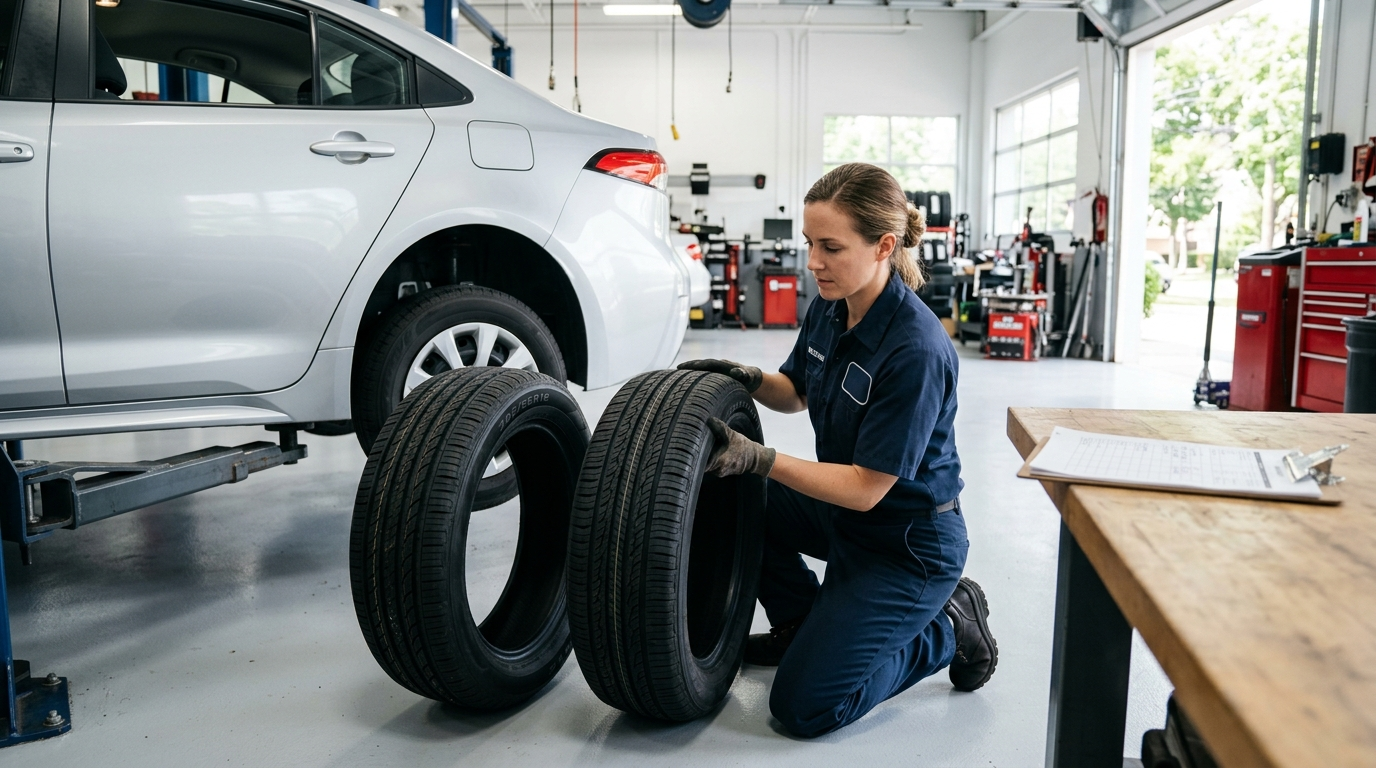
The Sticker Price Does Not Show the Tire’s Lifetime Cost
Two tires can have dramatically different purchase prices yet produce similar value over several years. A $70 tire that lasts 25,000 miles may cost more per mile than a $110 tire rated for 55,000 miles. That comparison is still incomplete because installation, rotations, balancing, fuel consumption, wet-weather performance, and the likelihood of premature replacement also matter.
Calculate the approximate cost per expected mile before choosing. Use the manufacturer’s mileage warranty only as a reference, since alignment, inflation, climate, and driving style affect actual life.
- Purchase cost: tire price, mounting, balancing, valve stems, taxes, and disposal fees.
- Operating cost: fuel use, rotations, repairs, and alignment checks.
- Replacement cost: how often the set must be replaced and whether uneven wear forces an early change.
- Risk cost: the financial and personal consequences of weak wet braking or poor handling.
Ask the retailer for an installed, out-the-door quote and compare cost per projected mile rather than comparing online tire prices alone.
A Small Efficiency Difference Can Add Up at the Pump
Rolling resistance affects how much energy a vehicle needs to move. A budget tire with a less efficient compound or construction may not create a dramatic change on every trip, but a modest percentage difference in fuel economy can become meaningful for drivers who commute long distances or operate a heavy vehicle. Underinflation, excessive weight, and poor alignment can create an even larger penalty than tire design.
Fuel economy is not a reason to buy the most expensive tire automatically. It is a reason to compare independently tested efficiency information when available and to maintain the tire correctly after installation.
- Check pressure at least monthly and before long trips, using the vehicle manufacturer’s door-jamb specification.
- Do not use the maximum pressure molded into the sidewall as the normal target unless the vehicle maker specifies it.
- Request an alignment inspection if the steering wheel is off-center or the tread is wearing on one edge.
- Compare fuel-saving claims only among tires in the correct size and load rating for your vehicle.
If you drive 15,000 to 20,000 miles annually, ask for evidence behind any efficiency claim and include expected fuel savings in your ownership estimate.
Wet Braking and Emergency Control Are Worth More Than a Minor Discount
Tires are the only components connecting your vehicle to the road. Tread design, rubber compound, casing construction, and age all influence braking and cornering, particularly on wet pavement. A tire can be legally new and still be a poor match for a driver who regularly faces heavy rain, standing water, mountain roads, or winter temperatures.
Do not rely on a familiar-sounding brand name or an attractive tread pattern. Look for independent test results, a clear warranty, appropriate traction and temperature ratings, and a reputation for consistent performance across the conditions you actually encounter.
- Rain: prioritize grooves that evacuate water and credible wet-braking tests.
- Snow and ice: use tires designed for winter conditions when temperatures regularly fall below about 45°F; all-season tires are not universal winter tires.
- Highway use: consider stability, noise, and treadwear consistency.
- Performance driving: verify heat tolerance and handling ratings rather than choosing based on price.
Before buying, ask the installer which lower-priced tire they would trust for your usual roads in a sudden emergency, not merely for dry-weather commuting.
Uneven Wear Can Turn an Affordable Set Into a Repair Bill
Cheap tires do not directly cause every alignment or suspension problem, but inconsistent construction, poor balance, incorrect fitment, and rapid tread wear can expose existing issues sooner. If a vehicle pulls, vibrates, or wears tires unevenly, replacing the tires without diagnosing the cause often wastes money. The new set may develop the same problem within a few thousand miles.
Installation is the right time to check the complete tire-and-wheel system. A quality retailer should identify bent wheels, worn steering parts, incorrect tire size, and alignment problems instead of treating every purchase as a simple swap.
| Condition | What it may indicate | Useful next step |
|---|---|---|
| Wear on both outer shoulders | Low inflation or aggressive cornering | Check cold pressure and inspect for leaks |
| Wear on one inner edge | Alignment or suspension issue | Request alignment and steering inspection |
| Cupped or scalloped tread | Balance, shock, or suspension problem | Inspect wheel balance and dampers |
| Steering-wheel vibration | Imbalance, bent wheel, or tire defect | Have the assembly balanced and examined |
Keep the inspection report and ask whether alignment is included, discounted, or billed separately before approving the work.
Mileage Warranty Matters Only When the Tire Fits Your Driving
A long mileage warranty can make a mid-range tire attractive, but warranty mileage is not a promise that every driver will receive that number. Coverage commonly depends on documented rotations, proper inflation, alignment, original tread depth, and replacing the full set at the same time. Some warranties also provide only prorated credit, not a free replacement.
Compare the warranty terms as carefully as the advertised mileage. A tire with a lower rating may be the better choice for a vehicle that sees severe winters, rough roads, frequent towing, or mostly short urban trips.
- Confirm the mileage rating for your exact tire size and speed/load version.
- Ask how often rotations must occur and whether receipts are required.
- Check the workmanship, road-hazard, and uniformity guarantees separately.
- Find out whether replacement credit is prorated and whether mounting and balancing are excluded.
Save invoices, rotation records, and alignment documentation. If a retailer will not explain the warranty in plain language, treat that as a reason to keep comparing.
Discount, Mid-Range, and Premium Tires Offer Different Tradeoffs
The cheapest tire is not always unsafe, and the most expensive tire is not always the best value. The goal is to avoid paying for performance you will never use while refusing a tire whose limitations conflict with your driving. The following broad U.S. planning ranges illustrate how options often compare; exact pricing changes with tire size, vehicle, retailer, promotions, and season.
| Tier | Approximate installed price per tire | Typical strengths | Potential tradeoffs |
|---|---|---|---|
| Discount | $80–$150 | Low initial cost, basic transportation | Variable wet grip, noise, shorter life, limited support |
| Mid-range | $120–$220 | Balanced durability, comfort, warranty value | May lack specialized winter or performance capability |
| Premium | $180–$350+ | Refined handling, strong testing, advanced compounds | Higher upfront cost and sometimes faster wear in severe use |
Compare at least one option from each tier that carries the vehicle’s required ratings. Then ask which features are relevant to your roads instead of assuming a higher price guarantees lower lifetime cost.
Road Conditions and Seasonal Demand Should Change the Choice
Tire selection should reflect the worst conditions you regularly face, not only the weather on purchase day. A commuter in a mild climate may value quiet, long-wearing touring tires. A driver in a snowbelt may need dedicated winter tires, even if that means buying and storing two sets. Someone on gravel roads may benefit from stronger sidewalls and puncture resistance rather than a low-cost highway design.
Seasonal demand also affects availability and pricing. Winter tires become harder to find when the first major storm arrives, while popular summer and all-season sizes can sell out during spring and fall changeovers.
- Shop before peak season, not after weather has already changed.
- Confirm the tire’s temperature range and severe-snow certification where relevant.
- For frequent gravel or construction-road travel, inspect sidewall protection and load capacity.
- For towing or heavy loads, follow the vehicle and trailer manufacturer’s load requirements.
Write down your normal mileage, climate, road surface, and load before shopping. This short profile makes tire offers easier to compare and reduces impulse purchases.
The Lowest Online Price May Not Be the Lowest Installed Price
Online listings can be useful for finding tire offers, but the displayed tire-only price may exclude mounting, balancing, disposal, taxes, shipping, road-hazard coverage, and alignment. A local shop may appear more expensive while including installation, free rotations, warranty assistance, or a convenient replacement policy. Comparing complete packages prevents misleading savings.
- Record the exact tire size, load index, speed rating, and vehicle fitment.
- Get an itemized quote from at least three sellers, including delivery and installation.
- Ask whether the tires are newly manufactured and request the DOT date code if age is a concern.
- Confirm appointment availability, warranty handling, rotation pricing, and road-hazard terms.
- Compare the final total, service quality, and expected mileage—not just the tire line on the quote.
When searching for a tire shop near you, read recent reviews for balancing accuracy, warranty support, and resolution of defects. A nearby installer with transparent pricing can be more valuable than a distant seller offering a slightly lower tire-only price.
Use a Simple Do-and-Don’t Checklist Before Buying
Most costly tire mistakes are preventable. Drivers often focus on the brand or sale price while overlooking vehicle specifications, tire age, service terms, or the condition that caused the old set to fail. A short checklist gives you a repeatable decision process.
Do:
- Match the door-jamb size, load index, and speed rating unless a qualified professional approves an alternative.
- Replace tires in pairs on the same axle, or replace all four when the vehicle manufacturer recommends it.
- Inspect tread depth, sidewalls, and pressure regularly.
- Budget for rotations and an alignment check when symptoms or wear patterns justify one.
Don’t:
- Mix radically different tire types or performance levels without understanding the handling effect.
- Buy used tires with unknown repairs, uneven wear, cracking, or an unclear age.
- Ignore a tire-pressure warning, vibration, bulge, or repeated air loss.
- Assume a mileage warranty covers damage from potholes, underinflation, or missed maintenance.
Take this checklist with you or use it while reviewing online quotes, and pause the purchase if the seller cannot verify fitment or total cost.
A Better Value Decision Starts With Cost Per Mile
After collecting quotes, estimate cost per mile using the installed set price divided by realistic—not merely advertised—mileage. For example, a $420 installed set expected to last 40,000 miles costs about 1.05 cents per mile before fuel and service. A $300 set lasting 22,000 miles costs about 1.36 cents per mile. The less expensive purchase therefore costs more over its useful life, even before considering reduced wet performance or an earlier replacement.
Use conservative estimates and adjust for your conditions. If you drive aggressively, carry heavy loads, live on rough roads, or cannot maintain regular rotations, actual mileage may be below the warranty figure.
- Compare the best discount option against a credible mid-range alternative.
- Add expected rotation, alignment, and seasonal storage costs.
- Estimate whether fuel savings are plausible for your mileage.
- Assign greater weight to wet-weather and winter performance if those risks are common.
Choose the tire that balances cost per mile, required safety performance, and dependable service. That is usually a more defensible purchase than choosing the lowest number on a search page.
Frequently Asked Questions About Tire Value
Q: Are cheap tires automatically dangerous?
A: No. Some budget tires meet required standards and work adequately for moderate driving. The concern is inconsistent performance, limited testing information, shorter life, and poor suitability for demanding weather or loads. Verify ratings, independent reviews, warranty support, and fitment.
Q: How much more should I spend for a better tire?
A: There is no universal premium. A mid-range tire may cost roughly $40 to $100 more per tire than a discount model, while a premium option may add substantially more. Compare expected mileage, wet performance, warranty, and included services to determine whether the difference is justified.
Q: Is a tire’s mileage warranty reliable?
A: It is a comparison tool, not a guarantee. Coverage often requires documented rotations, correct inflation, alignment, and prorated replacement. Read the actual warranty and ask what costs remain out of pocket.
Q: Should I replace all four tires at once?
A: For many all-wheel-drive vehicles, replacing all four is important to avoid excessive differences in rolling circumference. For two-wheel-drive vehicles, replacing tires in axle pairs is commonly recommended. Follow the vehicle manufacturer’s guidance and ask a qualified tire professional.
Q: When should I buy seasonal tires?
A: Shop several weeks before the season begins. Waiting for the first storm can limit sizes and appointments, while early shopping often gives you more choice and time to compare total installed prices.
The Smartest Next Step Is an Itemized Comparison
Start with the specifications printed on your vehicle’s door placard, then gather three itemized quotes for tires that meet those requirements. Include installation, balancing, disposal, taxes, warranties, rotations, and any alignment work. Eliminate options with unclear age, missing ratings, weak warranty terms, or poor fit for your climate.
For many drivers, the best price is found in the middle: a tire with credible wet-weather performance, realistic tread life, and a service network that will stand behind the purchase. Spending slightly more today can reduce replacement frequency, fuel waste, repair exposure, and stress later. The right decision is not the cheapest tire—it is the tire that delivers dependable performance at the lowest reasonable lifetime cost.